Delving into the world of sales representative jobs, this guide aims to provide a detailed insight into the role, skills required, educational background, sales techniques, compensation, and career growth prospects. Let's unravel the nuances of this dynamic field.
Overview of Sales Representative Jobs

A sales representative plays a crucial role in promoting and selling products or services on behalf of a company. They act as the main point of contact between the company and its customers, working to increase sales and build strong relationships.
Responsibilities of a Sales Representative
- Identifying and contacting potential customers to pitch products or services.
- Presenting and demonstrating products to customers.
- Negotiating sales terms and agreements with customers.
- Building and maintaining long-term relationships with clients.
- Meeting sales targets and goals set by the company.
Importance of Sales Representatives in a Company
Sales representatives are vital to a company's success as they are responsible for driving revenue and increasing market share. They serve as the face of the company to customers, helping to build brand loyalty and trust. Their ability to effectively communicate the value of products or services can directly impact the company's bottom line.
Skills Required for Sales Representative Jobs
Being a successful sales representative requires a specific set of skills that are essential for excelling in this role.
Communication Skills
Effective communication skills are crucial for sales representatives as they need to clearly convey product information, negotiate deals, and build relationships with customers. Strong verbal and written communication skills help in presenting products or services persuasively and addressing customer queries and concerns.
Negotiation Skills
Negotiation skills are vital for sales representatives as they are constantly dealing with pricing, terms, and closing deals. Being able to negotiate effectively can lead to successful sales outcomes and help in securing long-term partnerships with clients. Sales representatives need to understand the needs of customers and find mutually beneficial solutions through negotiations.
Educational Background and Qualifications
When it comes to sales representative positions, employers typically look for candidates with a minimum educational background of a high school diploma or equivalent. However, having a bachelor's degree in business, marketing, or a related field can greatly enhance a candidate's chances of securing a sales representative job.
Relevant Work Experience
Having relevant work experience in sales or customer service can significantly boost a candidate's suitability for sales representative roles. Previous experience in a sales role, whether it's in retail, telemarketing, or direct sales, can demonstrate a candidate's understanding of sales techniques, customer relationship management, and the ability to meet targets.
- Experience in a customer-facing role where you interacted with clients and resolved their concerns can showcase your communication and problem-solving skills.
- Demonstrated success in meeting or exceeding sales targets in previous roles can highlight your ability to drive results and generate revenue.
- Experience using CRM software or sales tools can demonstrate your proficiency in leveraging technology to manage customer relationships and track sales activities.
Certifications and Courses
Completing relevant certifications or courses can further enhance an aspiring sales representative's qualifications and set them apart from other candidates. Some examples of certifications and courses that may benefit individuals pursuing sales roles include:
-
Certified Sales Professional (CSP) certification
: This certification validates a candidate's knowledge and skills in sales techniques, negotiation, and relationship building.
-
HubSpot Inbound Sales Certification
: This course provides training on inbound sales strategies, lead generation, and customer engagement, which are essential skills for modern sales representatives.
-
LinkedIn Learning Sales Training and Tutorials
: These online courses cover a wide range of sales topics, from prospecting to closing deals, and can help individuals develop their sales skills.
Sales Techniques and Strategies
Effective sales techniques and strategies are crucial for sales representatives to succeed in their roles. These methods help sales professionals engage with potential customers, build relationships, and ultimately close deals. Let's delve into some of the key sales techniques and strategies that can make a difference in a sales representative's performance.
Building and Maintaining Customer Relationships
Building and maintaining strong relationships with customers is essential for sales representatives. By developing a rapport with clients, sales professionals can gain trust and loyalty, making it easier to influence purchasing decisions. It is important to listen to customer needs, provide personalized solutions, and follow up consistently to ensure customer satisfaction.
- Actively listen to customers to understand their requirements and concerns.
- Provide value-added solutions tailored to meet each customer's specific needs.
- Regularly follow up with customers to address any issues and maintain communication.
- Personalize interactions with customers to create a memorable and positive experience.
Understanding Market Trends and Competition
Sales representatives must stay informed about market trends and the competitive landscape to effectively position their products or services. By understanding industry developments and monitoring competitors, sales professionals can adapt their strategies and offerings to stay ahead in the market.
- Conduct market research to identify emerging trends and consumer preferences.
- Analyze competitor strategies to differentiate your offerings and highlight unique selling points.
- Adjust sales tactics based on market dynamics and changing customer demands.
- Stay updated on industry news and developments to anticipate market shifts and opportunities.
Compensation and Career Growth
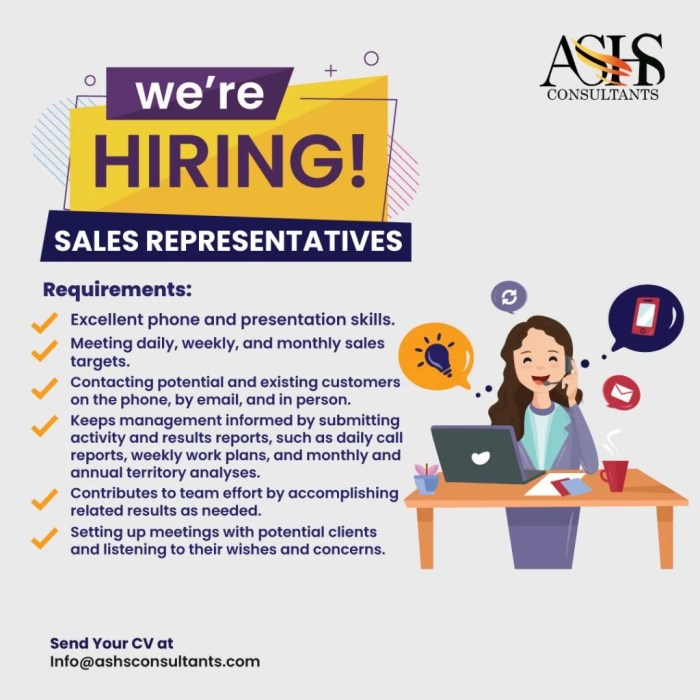
As a sales representative, your compensation structure typically consists of a base salary along with commission and bonuses based on your sales performance. This means that the more sales you make, the higher your earnings potential.
Opportunities for Career Growth and Advancement
There are plenty of opportunities for career growth in sales representative roles. As you gain experience and demonstrate success in meeting and exceeding sales targets, you may be considered for promotions to roles such as sales manager, regional sales director, or even VP of sales.
Additionally, some companies offer training programs and mentorship to help you develop your skills and advance in your career.
Performance Metrics and Incentives
Performance metrics are often tied to incentives for sales representatives to motivate them to achieve their targets. This could include bonuses for meeting or exceeding sales goals, prizes for top performers, or even recognition within the company. By aligning incentives with performance, companies can drive their sales team to excel and reach higher levels of success.
Summary
In conclusion, sales representative jobs offer a challenging yet rewarding career path for individuals with the right skills and mindset. This guide has shed light on the key aspects of these roles, paving the way for a successful journey in the sales industry.
Question & Answer Hub
What are the typical responsibilities of a sales representative?
A sales representative is responsible for identifying and reaching out to potential customers, demonstrating products or services, negotiating deals, and maintaining customer relationships.
What skills are essential for a sales representative?
Essential skills for a sales representative include strong communication, negotiation, and interpersonal skills, as well as the ability to understand market trends and customer needs.
How can relevant work experience enhance a candidate's suitability for sales representative jobs?
Relevant work experience can demonstrate a candidate's understanding of sales processes, industry knowledge, and ability to handle customer interactions effectively, making them a valuable asset to the company.
What are the typical compensation structures for sales representatives?
Compensation for sales representatives often includes a base salary along with incentives or commissions based on sales performance. Some companies may also offer bonuses or rewards for achieving targets.
What opportunities exist for career growth in sales representative roles?
Sales representative roles offer opportunities for advancement to positions such as sales manager, regional sales director, or even VP of sales, depending on performance and experience.